Heat pumps for landlords in Leeds
Leeds at a glance
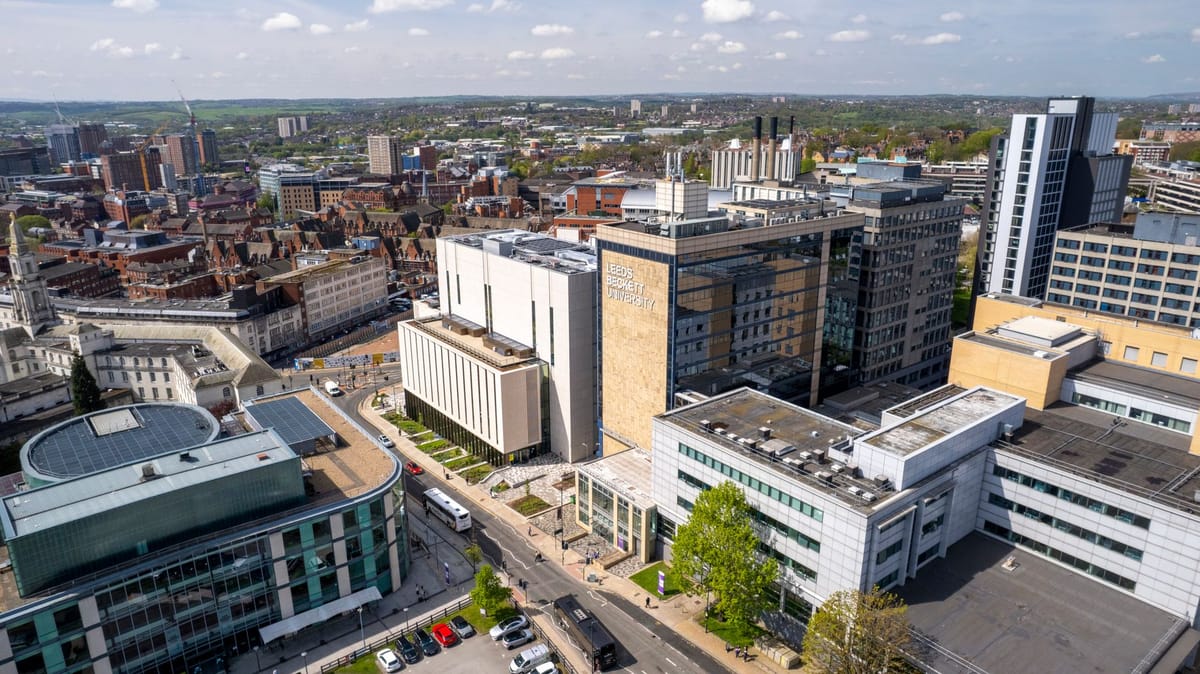
- Council: Leeds City Council, net zero target 2030
- Population: 793,139
- Postcode areas: LS
- Nearby: Bradford, Wakefield, Harrogate, Castleford, Pudsey
The Leeds rental market in numbers
Leeds is a large city with a smaller private rented share than many. The 2021 Census counts 74,402 privately rented households out of 341,466, which is 21.8%. Owner-occupiers are 57.0% and social tenants 20.4%. In absolute terms that is still more rented homes than Manchester’s 69,403, spread across a bigger city.
The stock is dominated by houses. Semi-detached homes are 37.5% of households (about 128,000), terraced homes 25.0% (about 85,400) and detached 15.5%. Purpose-built flats are 17.5% (about 59,800) and converted or shared houses 2.7%. Houses with a garden or yard are the easier heat pump candidates, because there is space for an outdoor unit and usually somewhere for a hot water cylinder.
These figures are for all households, not rented homes only, so check your own property.
Gas dominates, which makes the sums tight
Mains gas heats 76.7% of Leeds homes, about 261,900 households. Electric-only heating is 10.7%, about 36,500. District heating is 0.5%, oil 0.2%, and 2.2% report no central heating.
That split has three consequences for a Leeds landlord:
- Most swaps are gas to heat pump. At the Ofgem cap for 1 October to 31 December 2026, gas is 7.97p per kWh and electricity 26.32p. A heat pump needs a seasonal efficiency of about 3.0 just to match a 90% efficient boiler on running cost.
- The £9,000 grant rarely applies. The higher Boiler Upgrade Scheme rate needs oil or LPG with no mains gas connection. At 0.2% oil, plan on £7,500. See replacing oil or LPG in a rental if you do have an off-gas property.
- The 10.7% on electric heating is where the gain is. Replacing panel or storage heaters cuts the tenant’s heating units by roughly two thirds at a seasonal efficiency of 3.0.
Selective licensing from 9 February 2026
Leeds City Council’s new selective licensing designation for East, South and West Leeds began on 9 February 2026. The council said in October 2025 that it would cover around 12,500 privately rented homes in parts of six wards:
| Ward (parts of) | Notes |
|---|---|
| Armley | Also in the HMO Article 4 area |
| Beeston and Holbeck | Earlier Beeston scheme ran 2020 to 2025 |
| Burmantofts and Richmond Hill | Also in the HMO Article 4 area |
| Gipton and Harehills | Earlier Harehills scheme ran 2020 to 2025 |
| Hunslet and Riverside | |
| Farnley and Wortley |
Every rented home in the area needs a licence, including each self-contained flat. The council lists the total fee as £1,100 online or £1,225 on paper, and if you buy in the area you must apply within 14 days of completing. Renting without a valid application can lead to prosecution with an unlimited fine or a civil penalty of up to £40,000.
The council reported that the earlier Beeston and Harehills schemes led to more than 6,700 inspections, 1,430 properties improved and 400 civil penalties. A licence comes with conditions, so plan heating work with the conditions in front of you, and ask the council if a change of system affects them.
HMOs and the Article 4 area
Leeds has an HMO Article 4 direction. Inside it, converting a home to an HMO for three or more people needs planning permission. The council lists the areas as Adel and Wharfedale, Armley, Beeston Hill and Holbeck, Bramley and Stanningley, Burmantofts and Richmond Hill, Chapel Allerton, City and Hunslet, Gipton and Harehills, Headingley, Horsforth, Hyde Park and Woodhouse, Kirkstall, Moortown, Roundhay and Weetwood. Anywhere in Leeds, an HMO for seven or more needs permission.
A shared house with several showers has a high hot water demand, which drives cylinder size and heat pump sizing. Read the HMO landlord guide and radiators and hot water in rentals before getting quotes.
Heat networks: PIPES and the zone pilot
Leeds has a live council heat network. Leeds City Council describes Leeds PIPES as delivering waste-powered heat to almost 2,000 properties, including council flats in Lincoln Green. In October 2024 the government named Leeds among six places sharing £5.8 million to develop the first heat network zones, with the Leeds system planned to take heat from a nearby glass factory and construction expected from 2026.
For a private landlord this matters mainly for city centre blocks. If your building could connect, ask the council before installing individual units. For a terrace in Armley or a semi in Horsforth, a heat network is not a realistic near-term option.
Grants, EPC C and the council plan
- Boiler Upgrade Scheme: £7,500 for air-to-water or ground source, £2,500 for air-to-air that replaces existing heating. See the BUS page for landlords.
- Warm Homes: Local Grant: Leeds has £5,963,439 on the GOV.UK list updated 2 July 2026. See the Warm Homes Local Grant page.
- Warm Homes Loan Scheme: a lender loan, not a grant.
Today the legal minimum is EPC E, with a £3,500 cost cap including VAT. The planned EPC C by 1 October 2030 has a £10,000 cap, and the regulations are not yet laid. Read the cost cap and exemptions. The council’s aim of a carbon neutral Leeds by 2030 is a council goal, not a landlord duty.
When a heat pump is the wrong answer
- A gas-heated semi with poor loft and wall insulation: insulate first, then decide.
- A city centre flat with no lawful spot for a unit or no freeholder consent.
- A shared house where hot water demand would need a cylinder you have no room for.
- A sale planned within a year or two.
Test your own figures with the landlord heat pump calculator, or send an enquiry and relevant independent firms contact you, with no charge to you and no obligation.
Landlord questions in Leeds
Is my Leeds rental in the selective licensing area?
It may be if it is in East, South or West Leeds. Leeds City Council's designation started on 9 February 2026, runs for five years and covers around 12,500 privately rented homes in parts of Armley, Beeston and Holbeck, Burmantofts and Richmond Hill, Gipton and Harehills, Hunslet and Riverside, and Farnley and Wortley. Check the council's interactive map. The council lists the total fee at £1,100 online.
Can Leeds landlords use the Warm Homes: Local Grant?
Leeds is on the GOV.UK list of Warm Homes: Local Grant authorities with £5,963,439 of funding (list updated 2 July 2026). The grant is for lower-income privately owned or privately rented homes rated EPC D to G, and landlords declare rent will not rise because of the funded work. Ask the council how to apply and whether funding remains.
Do I need planning permission to turn a Leeds house into an HMO?
In the Article 4 area, yes for three or more people. Leeds City Council's direction covers areas including Headingley, Hyde Park and Woodhouse, Kirkstall, Armley and Gipton and Harehills. Outside it, an HMO for seven or more people still needs permission. An HMO licence for five or more is a separate process.
Should a Leeds landlord wait for a heat network instead?
Only if your building is near one. Leeds PIPES already serves almost 2,000 properties with waste-powered heat, and Leeds is one of the government's first heat network zone pilots. Only 0.5% of Leeds households were on district heating in 2021, so most landlords of houses should not wait.
Sources
- ONS Census 2021 via Nomis: TS054 tenure, TS044 accommodation type, TS046 central heating, read 8 October 2026
- DESNZ, Heat networks zoning pilot, read 8 October 2026
- MHCLG, Civil penalties under the Renters' Rights Act 2025 and other housing legislation, read 8 October 2026
- GOV.UK, Warm Homes: Local Grant successful local authorities, read 8 October 2026
Council licensing, planning and grant details were read on the council's own pages on the dates logged for this guide. Check with Leeds City Council before you rely on them.
Sources
- ONS Census 2021 via Nomis: TS054 tenure, TS044 accommodation type, TS046 central heating (read 8 October 2026)
- GOV.UK, Apply for the Boiler Upgrade Scheme: check if you are eligible (read 8 October 2026)
- DESNZ/MHCLG, Improving the energy performance of privately rented homes: 2025 update - government response (published 21 January 2026) (read 8 October 2026)
Want quotes for a rental property, or a second opinion?
Tell us about the property. We pass your enquiry to relevant independent heat pump firms that cover your postcode, and they contact you directly. There is no charge to you for the introduction and no obligation to go ahead.
What happens next
- We read your enquiry and check which kind of firm can help.
- We pass it to relevant independent firms that cover your postcode.
- They contact you with questions or a quote. You compare, and decide — with no obligation to go ahead.